Operating Expenses vs Capital Expenditures: Differences
Updated: Oct 14, 2024
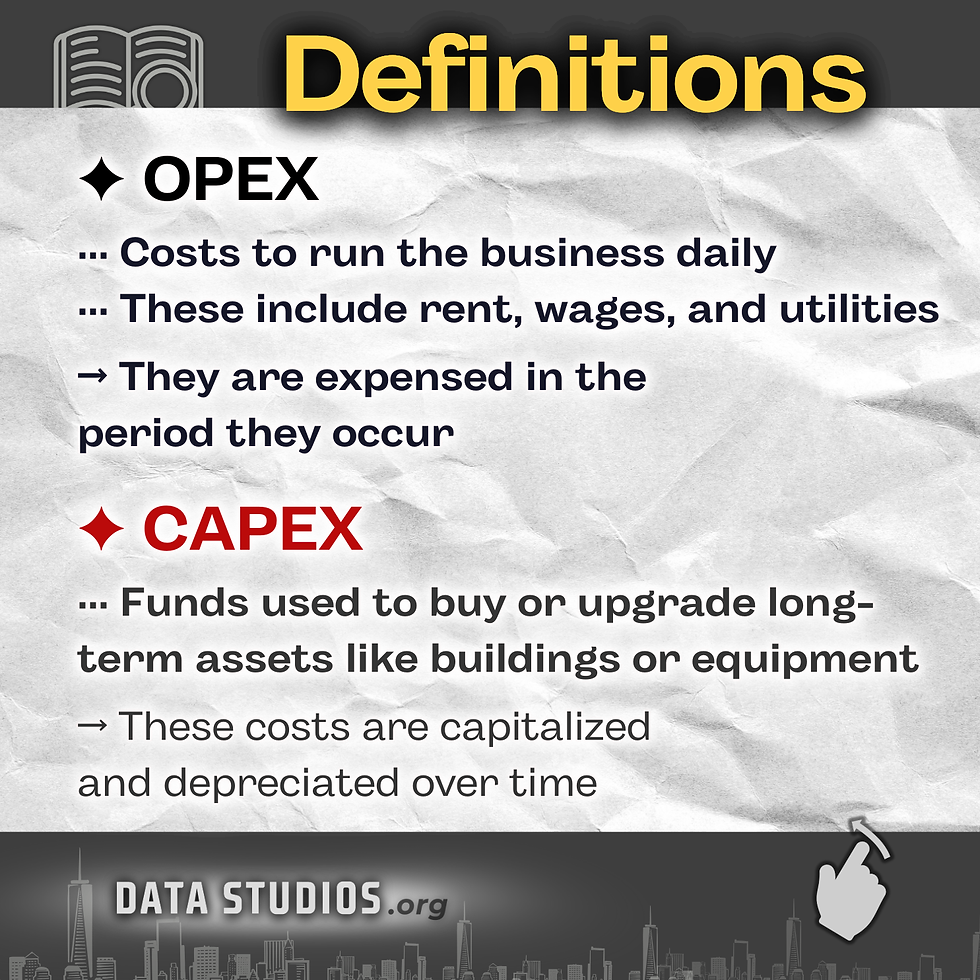
📖 DEFINITIONS
✦ OPERATING EXPENSES
They are the day-to-day costs required to run a business; These include items like rent, utilities, wages, and marketing expenses;
→ Operating expenses cover regular, recurring costs necessary for the daily operations of the business, and they are fully expensed in the period they occur.
✦ CAPITAL EXPENDITURES
They are funds used to purchase, upgrade, or maintain long-term assets like equipment, buildings, or technology infrastructure;
→ Capital expenditures are investments in the company’s long-term future and are capitalized on the balance sheet, meaning they are depreciated over several years instead of being fully expensed immediately.
_______________
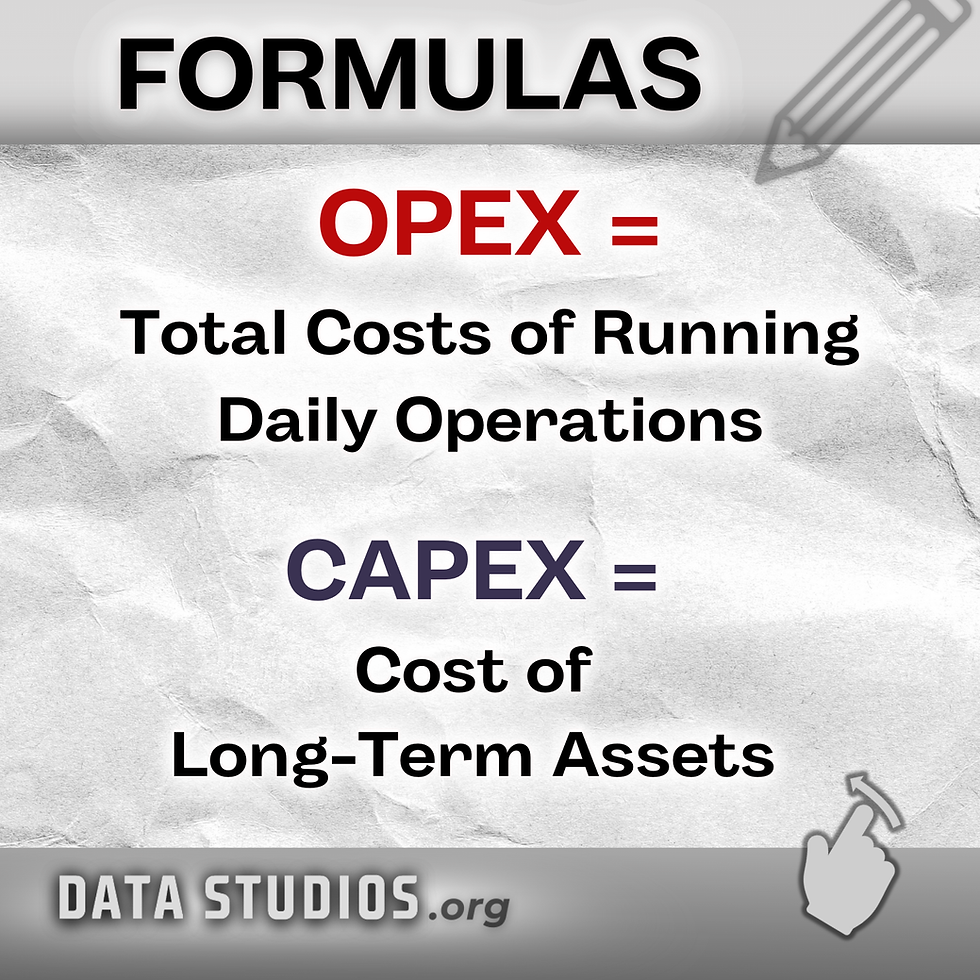
🔢 FORMULAS
✦ OPERATING EXPENSES = Total Costs of Running Daily Operations
→ Includes salaries, rent, utilities, and other operational costs.
✦ CAPITAL EXPENDITURES = Purchase Price of Long-Term Assets
→ Includes the cost of acquiring or upgrading physical assets like property, machinery, and equipment.
_______________
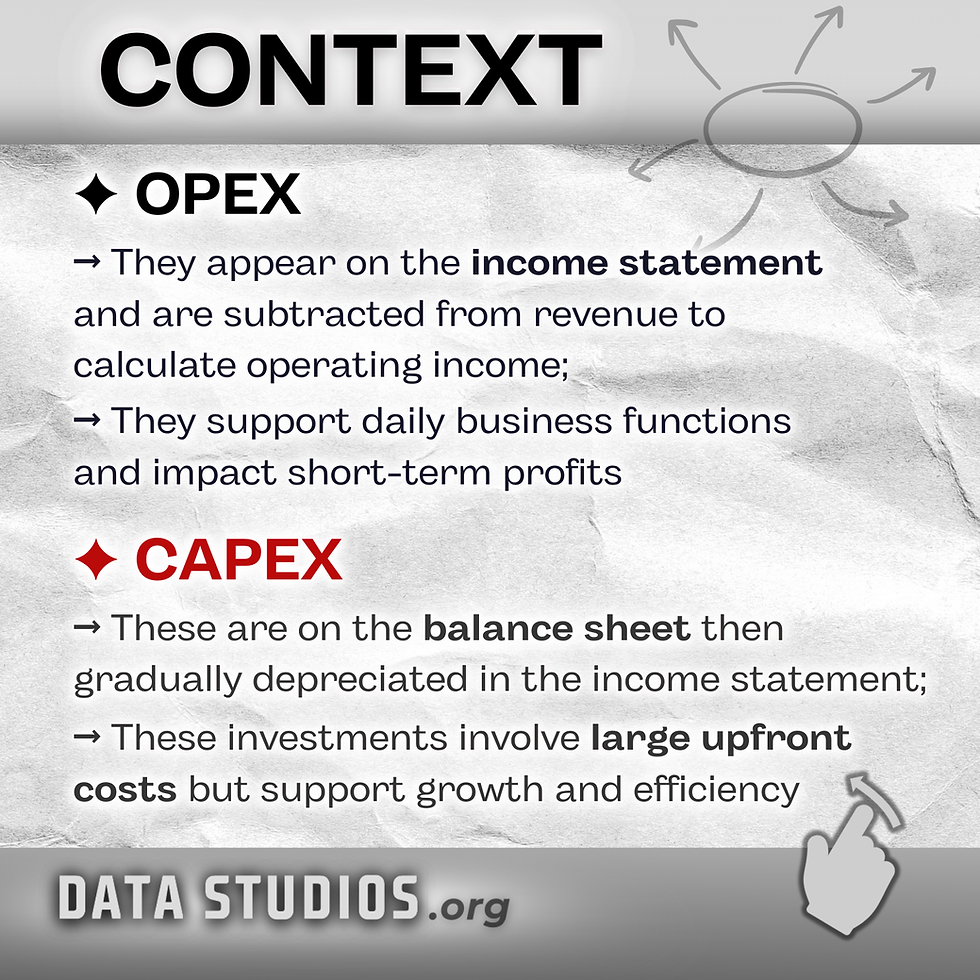
⚙️ CONTEXT
✦ OPERATING EXPENSES
→ Position in Financial Statements: Operating expenses are recorded on the income statement, usually listed below gross profit (revenue minus COGS); They are subtracted from revenue to calculate operating income;
→ They are necessary for maintaining the company’s day-to-day functions; These expenses directly impact a company’s profitability in the short term, as they are deducted from revenue in the period they occur;
→ Managing operating expenses efficiently is crucial for improving operating margins and ensuring smooth business operations.
✦ CAPITAL EXPENDITURES
→ Position in Financial Statements: Capital expenditures are recorded on the balance sheet as assets and are not immediately expensed; Instead, they are gradually depreciated or amortized over time;
→ Capital expenditures refer to investments in assets that will provide value for many years; These expenditures are recorded on the balance sheet and are gradually expensed through depreciation or amortization over time;
→ Capital expenditure decisions often involve trade-offs, as they require large upfront costs, but they help drive long-term growth and efficiency improvements.
_______________
📊 MORE
✦ OPERATING EXPENSES
→ Advantages: Operating expenses cover immediate business needs and are fully expensed within the period, allowing for immediate tax deductions; They ensure smooth daily operations without the need for large upfront investments;
→ Disadvantages: High operating expenses can reduce profit margins, and inefficient management of these expenses can hurt a company’s profitability.
✦ CAPITAL EXPENDITURES
→ Advantages: Capital expenditures improve long-term business capacity, increase efficiency, and enhance competitiveness by investing in new technologies, infrastructure, or machinery;
→ Disadvantages: Capital expenditures require significant upfront capital and provide returns only over the long term; Misjudging capital investments can strain financial resources or lead to inefficient use of assets.
_______________
💡 SUMMARY
✦ OPERATING EXPENSES → Operating expenses are day-to-day costs required to run a business, like rent, utilities, and wages; They impact the company's immediate profitability as they are fully expensed in the same period;
✦ CAPITAL EXPENDITURES → Capital expenditures are investments in long-term assets, such as machinery, buildings, and equipment; These costs are capitalized and depreciated over time, helping the company grow over the long term;
→ Both operating expenses and capital expenditures are essential for business operations; Operating expenses ensure smooth daily functions, while capital expenditures drive long-term growth and efficiency improvements.
_______________
FOLLOW US FOR MORE.